Category: Digital Marketing

  • Why Every Dental Practice Needs a Custom Website in 2025

    Why Every Dental Practice Needs a Custom Website in 2025

    In 2025, digital presence isn’t just a competitive advantage for dental practices—it’s a necessity. As patients increasingly turn to online platforms to find and evaluate dental services, having a robust, unique, and optimized website is no longer optional. A custom dental website is the digital front door to your practice, and it plays a critical role in attracting, converting, and retaining patients.

    This article explores why a custom website tailored specifically to your dental practice is vital in 2025 and how pairing it with the right dental marketing solutions can elevate your success.

    1. The Evolution of Patient Behaviour

    The way people find and choose dentists has changed dramatically over the last decade. Patients now conduct extensive online research before booking an appointment. They’re reading reviews, comparing services, checking credentials, and judging the quality of your practice based on your website’s design and content.

    In 2025, this trend is stronger than ever:

    • Mobile-first browsing
    • Voice searchis becoming more prevalent.
    • Patient expectationsfor seamless digital experiences are higher than ever.

    A custom dental websites ensures that your online presence aligns with how modern patients search and decide.

    2. First Impressions Matter—A Lot

    You only get one chance to make a first impression, and in today’s world, that impression often happens online. According to studies, it takes just 0.05 seconds for users to form an opinion about your website. If your site looks outdated, generic, or is hard to navigate, potential patients will click away—possibly to a competitor.

    Generic templates can’t reflect the unique strengths of your practice. A custom website allows you to:

    • Showcase your brand identity.
    • Highlight specific services.
    • Create a warm, trustworthy feel that reflects your in-office experience.

    A well-designed website builds credibility and trust, and ultimately encourages visitors to book appointments.

    3. SEO That Works for You

    Search engine optimization (SEO) is the backbone of online visibility. But effective SEO isn’t one-size-fits-all—especially in the dental field. Custom websites give you the flexibility to implement targeted SEO strategies that help your site rank higher for relevant local and service-based searches.

    For example:

    • Optimizing for “Invisalign in Seattle” or “emergency dentist near me.”
    • Structuring content to support voice search.
    • Including local schema markup for better Google Maps visibility.

    When combined with professional dental marketing solutions, a custom site can dramatically improve your online rankings and organic traffic.

    4. Mobile Optimization Is Mandatory

    As of 2025, more than 75% of patients use their mobile devices to search for dental care. A custom dental website is built from the ground up with mobile responsiveness in mind, ensuring your content is accessible and engaging on any screen size.

    Mobile optimization is not just about layout—it also affects:

    • Page loading speed(a Google ranking factor).
    • Navigation and usability.
    • Conversion rates—if a visitor can’t easily contact your office from their phone, they won’t.

    A custom mobile-first website eliminates these pain points and provides a seamless experience that encourages more bookings.

    5. Integration with Marketing Tools and Patient Systems

    Modern dental practices rely on a variety of tools—from online appointment scheduling to chatbots, patient portals, and review management software. A custom website allows seamless integration with these tools, providing both convenience for your team and a better experience for patients.

    With dental marketing solutions like those from DentalROI, your custom site can be equipped with:

    • Online booking systems.
    • Automated email follow-ups.
    • Live chat and AI bots.
    • Patient testimonials and video case studies.
    • Secure contact forms and HIPAA-compliant data handling.

    These tools help streamline operations and enhance engagement, giving your practice a competitive edge.

    6. Tailored Content That Converts

    Generic dental websites tend to offer cookie-cutter content that does little to differentiate your practice. A custom dental website gives you full control over your content strategy—from services pages and blog posts to FAQs and promotional landing pages.

    This enables you to:

    • Speak directly to your target audience.
    • Highlight your unique treatment philosophy or specialties.
    • Provide educational resources that position you as a trusted authority.

    When paired with strategic dental marketing solutions, such content drives not just traffic, but conversion—turning visitors into patients.

    7. Improved Analytics and Performance Tracking

    With a custom website, you have more options for tracking and analyzing visitor behavior. Understanding how users interact with your site can help you refine your strategy and increase ROI on marketing spend.

    Track things like:

    • Page views and bounce rates.
    • Conversion rates from online forms or phone calls.
    • Keyword performance and SEO health.
    • Click-through rates on promotions or service pages.

    Armed with this data, your dental marketing team can make informed decisions to continuously improve your outreach.

    8. Security and Compliance

    In an era of increasing cyber threats and stricter privacy laws, security and compliance are paramount for healthcare websites. Custom dental websites can be built with HIPAA compliance in mind and include features like:

    • Secure contact forms and appointment requests.
    • Encrypted patient communications.
    • SSL certificates and secure hosting environments.

    Not only does this protect your practice and your patients, but it also builds trust with website visitors.

    9. Scalability for Future Growth

    Your practice may grow, adding locations, expanding services, or targeting new patient demographics. A custom dental website is scalable and adaptable. Unlike rigid templates, it can evolve with your practice, accommodating changes without compromising performance or aesthetics.

    You can easily:

    • Add new service pages.
    • Launch new marketing campaigns.
    • Integrate new technology or plugins.

    Future-proofing your online presence is essential for long-term growth.

    10. Standing Out in a Competitive Market

    In competitive local markets, a custom website acts as a differentiator. It shows that you’ve invested in your practice and your patients. When a potential patient compares two dental websites—one generic, one custom—the difference is obvious.

    Custom design, high-quality visuals, strategic messaging, and clear calls to action all work together to create a powerful first impression. And that impression often determines whether a patient chooses your practice or someone else’s.

    Conclusion

    A custom dental website is more than just a digital brochure. It’s a dynamic, high-performing marketing asset that works 24/7 to represent your brand, attract new patients, and support your operations. In 2025, with patient expectations and online competition higher than ever, dental practices can’t afford to settle for cookie-cutter solutions.

    Partnering with professionals who understand the dental industry, like DentalROI, ensures your website and broader dental marketing solutions are built for results. From custom design and SEO to content creation and lead generation, DentalROI empowers dental practices to grow confidently in the digital age.

    If you’re ready to take your online presence to the next level, now is the time to invest in a custom website that reflects the quality, care, and expertise your practice provides every day.

  • Maximizing Customer Engagement with Email Marketing: The Ultimate Guide

    Maximizing Customer Engagement with Email Marketing: The Ultimate Guide

    Are you a business owner looking to boost customer engagement? Look no further than email marketing – a powerful tool that has been proven to drive results. With a well-crafted email campaign, you can create meaningful connections with your audience, increase brand loyalty, and ultimately grow your business. In this guide, we’ll explore some strategies and best practices to maximize customer engagement with email marketing.

    1. Build a Strong Email List

    Before you begin your email marketing journey, it’s crucial to have a solid foundation – a strong email list. Building an email list can be achieved through various methods such as website sign-ups, social media promotions, and even offline events. However, it’s important to ensure that your subscribers have willingly opted in to receive your emails. Quality over quantity should be your mantra when it comes to your email list.

    1. Segment Your Email List

    Once you have a sizable email list, don’t treat all your subscribers the same. Segmenting your list based on demographics, purchase history, and engagement level allows you to send targeted and personalized emails, which are more likely to catch your customers’ attention. For instance, sending a promotional email for women’s clothing to male subscribers would do more harm than good.

    1. Craft Compelling Subject Lines

    Email subject lines are your first impression. They determine whether your recipients will open your email or delete it without a second thought. To maximize engagement, make your subject lines compelling, relevant, and concise. Avoid spammy words or excessive use of capitalization, as they might end up in the dreaded spam folder. A subject line that sparks curiosity or speaks directly to the recipient’s pain points is more likely to get noticed.

    1. Create Personalized Content

    One-size-fits-all email content doesn’t cut it anymore. Personalization is the key to capturing your audience’s attention and fostering meaningful engagement. Use your segmentation data to tailor your content based on the recipient’s interests, preferences, and behaviors. Address your subscribers by their name, recommend products or services based on their previous purchases, and send relevant content that adds value to their lives.

    1. Focus on Mobile-Friendly Design

    In this mobile-centric era, it’s essential to ensure that your emails are optimized for mobile devices. The majority of people check their emails on their smartphones, so having a responsive design that adapts to various screen sizes is crucial. Keep your email design simple, use eye-catching visuals, and make sure your call-to-action buttons are easily clickable on a mobile device. A seamless mobile experience will greatly enhance customer engagement.

    1. Use Interactive Elements

    Take your emails to the next level by incorporating interactive elements. Including interactive features like professional stock photos, image sliders, quizzes, polls, or surveys can significantly boost engagement. When recipients actively participate and engage with your emails, they are more likely to stay interested and take the desired action. Experiment with different interactive elements to find what resonates with your audience.

    1. Incorporate User-Generated Content

    Nothing builds trust and authenticity like user-generated content (UGC). Encourage your subscribers to share their experiences with your product or service and include these testimonials, reviews, or social media posts in your emails. UGC not only provides social proof but also creates a sense of community among your customers. It gives them a voice and shows that you value their opinions, ultimately driving engagement and loyalty.

    1. A/B Test Your Campaigns

    To truly maximize customer engagement, it’s essential to continuously refine and improve your email marketing strategies. A/B testing allows you to compare different elements of your campaigns to determine what resonates best with your audience. Test different subject lines, content layouts, call-to-action buttons, or even send times to see what generates the highest engagement and conversion rates. Remember, small tweaks can lead to significant improvements.

    1. Monitor and Analyze Your Results

    Success in email marketing is not just about creating and sending great emails but also about analyzing the results. Use email analytics tools to track metrics such as open rates, click-through rates, conversions, and unsubscribe rates. By monitoring these metrics, you can gain valuable insights into what works and what doesn’t, allowing you to refine your email strategy and achieve higher customer engagement.

    1. Don’t Overdo It

    While email marketing can be a powerful tool, bombarding your subscribers with emails will do more harm than good. Respect your audience’s inbox and maintain a healthy balance. Sending too many emails can lead to annoyance, high unsubscribe rates, and even damage your brand’s reputation. Find the right frequency that works for your audience and be mindful of their preferences.

    In conclusion, email marketing is a valuable tool for maximizing customer engagement. By building a strong email list, segmenting your audience, personalizing content, optimizing for mobile, using interactive elements, incorporating user-generated content, testing and analyzing your campaigns, and finding the right balance, you can create effective email marketing campaigns that drive results. So, get started today and watch your customer engagement soar!

  • Unlocking Digital Marketing Success: The Crucial Role of IT Services

    Unlocking Digital Marketing Success: The Crucial Role of IT Services

    IT Services and Digital Marketing: A Crucial Intersection

    In the rapidly evolving digital marketing landscape, a business’s success hinges on more than traditional strategies. Today, it depends mainly on the IT infrastructure and services supporting these strategies. Robert Giannini, CEO of GiaSpace, underlines this point: “Digital marketing today is a complex interplay of data, analysis, algorithms, and real-time optimization. Without a robust IT backbone, your digital marketing strategy is akin to a top-tier sports car with no fuel – visually impressive, but lacking in function.”

    The Facilitators of Consumer Insights

    Understanding consumer behavior is vital in the digital age, as businesses craft personalized marketing campaigns based on intricate data points. This shift in approach requires IT services that maintain system performance and facilitate data processing and insights. Kenny Riley, CEO of Velocity IT, echoes this sentiment: “IT services have transcended their traditional roles and have become an integral piece of the puzzle in understanding customers better.”

    The New Era: AI, Machine Learning, and Cloud Computing

    The dawn of AI, machine learning, and cloud computing has further underscored the importance of IT in digital marketing. These cutting-edge technologies hold the potential to revolutionize marketing efforts through enhanced predictive analytics, automated content creation, and intelligent customer segmentation.

    Ashu Bhoot, CEO of Orion Networks, elaborates on the changing dynamic, “Our clients are seeking to harness the power of AI and machine learning to upgrade their digital marketing initiatives. Such undertakings require a powerful IT infrastructure and a high degree of expertise in data science, coupled with a thorough comprehension of digital marketing strategies.”

    The Need for the Right IT Services Provider

    As the digital world evolves, the right IT services provider’s role becomes pivotal to a business’s success. It’s not merely about finding a provider that offers technical support; businesses need strategic partners that provide advanced solutions and insights and offer a competitive edge.

    The IT services provider of the future understands not just technology but also the strategic objectives and goals of digital marketing. They will be instrumental in shaping the digital marketing landscape in the coming years, offering businesses a bridge between sophisticated technology and innovative marketing strategies.

  • LinkedIn Email Finder Tools – How to Find Someone’s Email on LinkedIn?

    LinkedIn Email Finder Tools – How to Find Someone’s Email on LinkedIn?

    In today’s interconnected world, networking and professional relationships play a crucial role in career advancement and business growth.

    LinkedIn, the world’s largest professional network, offers an extensive platform for professionals to connect and collaborate.

    You might be on LinkedIn, how well are you leveraging the power of this platform?

    One of the challenges often faced by LinkedIn users is how to find someone’s email address on the platform.

    Did you face a similar challenge?

    In this article, we will explore LinkedIn email finder tools and provide insights on how to effectively discover someone’s email using these tools.

    Let’s dive in!

    The Importance of Email Search Engines

    Email search engines have become indispensable tools for professionals, recruiters, and salespeople.

    What do these tools do?

    These tools allow users to uncover email addresses, enabling them to establish direct contact with potential leads, colleagues, or industry influencers.

    Email search engines provide an efficient solution for those seeking to connect with individuals outside their immediate network on platforms like LinkedIn.

    LinkedIn’s Built-in Email Search Feature

    LinkedIn itself offers a built-in feature that allows users to find and connect with people via email.

    While not everyone provides their email address on LinkedIn, those who do will have their email listed under the “Contact Info” section on their profile.

    Hence, when browsing someone’s profile, look for the “Contact Info” tab, and if their email address is available, it will be displayed there.

    This feature is a convenient and straightforward way to find someone’s email address directly on LinkedIn.

    Have you ever tried this approach?

    Utilizing Third-Party LinkedIn Email Finder Tools

    While LinkedIn’s built-in email search feature is useful, it may not always provide the desired results.

    In such cases, third-party LinkedIn email finder tools can be valuable resources.

    These tools are specifically designed to help users locate email addresses of individuals from their LinkedIn profiles.

    Here is a popular and effective LinkedIn email finder tool:

    GetEmail.io

    GetEmail.io is a powerful tool that enables users to find email addresses associated with LinkedIn profiles.

    Simply enter the person’s name and their company domain, and the tool will use machine learning and big data algorithm to locate the email address format.

    The tool also provides an email verification feature to ensure deliverability.

    Steps to Find Someone’s Email Using GetEmail.io LinkedIn Extension

    Now that we’ve introduced this third-party LinkedIn email finder tools, let’s explore the step-by-step process of using this tool to find someone’s email address:

    Step 1: Install the GetEmail.io LinkedIn extension, follow the instructions provided to install the tool’s extension or software.

    Step 2: Identify the Target Profile First, identify the LinkedIn profile of the person you want to find the email address for.

    Step 3: Access the LinkedIn profile of the person whose email address you want to find.

    Step 4: Click on the GetEmail button to obtain the email address of the target individual.

    Step 6: The tool should display the email address associated with the LinkedIn profile. You may make sure to verify the accuracy of the email address before proceeding.

    Best Practices for Using LinkedIn Email Finder Tools

    To ensure the best results and maintain ethical practices while using LinkedIn email finder tools, consider the following best practices:

    1. Respect Privacy: Only use email finder tools for professional purposes and refrain from misusing or spamming the obtained email addresses.
    2. Verify Email Accuracy: Always double-check the email addresses provided by these tools to ensure accuracy before initiating any communication.
    3. Personalize Your Outreach: Craft personalized and relevant messages when reaching out to individuals via email to increase the chances of a positive response.
    4. Follow GDPR and CAN-SPAM Regulations: Familiarize yourself with the data protection laws in your region and adhere to regulations such as GDPR (General Data Protection Regulation) and CAN-SPAM Act while using email finder tools.

    Concluding thoughts

    Finding someone’s email address on LinkedIn can be a valuable asset when it comes to networking, sales, or recruitment.

    While LinkedIn’s built-in email search feature is a convenient option, third-party LinkedIn email finder tools like GetEmail.io can provide additional functionality and accuracy.

    By following the steps outlined in this article and employing best practices, you can effectively utilize such tools to expand your professional network and enhance your outreach efforts.

    Remember to use these tools responsibly and respect privacy guidelines to maintain trust and foster meaningful connections.

    By leveraging the power of email search engines and LinkedIn email finder tools, you can unlock new opportunities and establish valuable connections in your professional journey.

    Did you find this insightful?

  • How to Do SEO at Home: Tips and Strategies for Optimizing Your Website

    How to Do SEO at Home: Tips and Strategies for Optimizing Your Website

    If you’re running a website or a blog, you may have heard about search engine optimization (SEO) and the importance of optimizing your content for search engines. 

    But did you know that you can do SEO at home, without the need for expensive tools or professional services? In this article provided by the SEO Agency Mallorca we’ll share some tips and strategies for doing SEO at home and improving your website’s visibility on search engines.

    Conduct Keyword Research

    Keyword research is the foundation of SEO, as it helps you to understand what your target audience is searching for and what keywords they are using to find content related to your niche. By conducting keyword research, you can identify the most relevant and profitable keywords for your content and optimize it accordingly.

    There are several free tools that you can use for keyword research, such as Google Keyword Planner, Ubersuggest, and Keyword Tool. These tools will provide you with information about the search volume, competition, and relevance of different keywords, allowing you to choose the best ones for your content.

    Optimize Your Content

    Once you have identified the most relevant keywords for your content, it’s time to optimize it for search engines. Here are some tips for optimizing your content:

    • Use your target keyword in the title, meta description, and URL of your content.
    • Include your target keyword in the first paragraph of your content.
    • Use variations of your target keyword throughout your content, but avoid keyword stuffing.
    • Use header tags (H1, H2, H3) to structure your content and make it easier to read.
    • Add internal and external links to your content to provide more value to your readers and improve your website’s authority.
    • Improve Your Website’s User Experience

    Search Engines Value User Experience

    As it indicates that your website is relevant and useful to your target audience. Here are some tips for improving your website’s user experience:

    • Ensure that your website is mobile-friendly and loads quickly on all devices.
    • Use a clear and readable font, and avoid using too many colors or graphics that can distract your readers.
    • Use a clean and simple layout that makes it easy for your readers to find the information they are looking for.
    • Add a search bar to your website to help your readers find content more easily.
    • Add a contact page and an about page to your website to establish trust and credibility with your readers.
    • Monitor Your Website’s Performance

    SEO is an ongoing process, and it’s important to monitor your website’s performance to identify what’s working and what needs improvement. Here are some tools that you can use to monitor your website’s performance:

    Google Analytics: This free tool provides you with information about your website’s traffic, user behavior, and conversions.

    Google Search Console: This free tool helps you to monitor your website’s presence on Google search, and provides you with information about your website’s rankings, clicks, and impressions.

    SEMrush: This is a paid tool that provides you with more advanced SEO metrics, such as keyword rankings, backlinks, and competitor analysis.

    By monitoring your website’s performance, you can identify areas for improvement and make data-driven decisions to optimize your content and improve your website’s visibility on search engines.

    Conclusion

    SEO can seem like a complex and intimidating task, but with the right strategies and tools, you can do it at home and improve your website’s visibility on search engines. By conducting keyword research, optimizing your content, improving your website’s user experience, and monitoring your website’s performance, you can create a strong online presence and attract more traffic and engagement to your website.

  • Optimizing Your App for Asian Markets: Keyword Promotion and ASO in Japan and South Korea

    Optimizing Your App for Asian Markets: Keyword Promotion and ASO in Japan and South Korea

    Optimizing Your App for Asian Markets: A Guide to Localization, Keyword Promotion and App Store Optimization in Japan and South Korea with Case Study

    Optimizing for Success: Navigating the Unique Challenges of App Store Optimization in Japan

    1. Gather both the keywords in Hiragana and Katakana for Japan locale.

    2. Verify machine translations with the aid of English-Japanese dictionaries as Google Translate often inaccurately translates into Japanese.

    3. Consider the Japanese chronology in your localization efforts.

    4. Be mindful of the meaning of numbers.

    5. Tailor your visual optimization to Japanese trends.

    6. Use Japanese models in app screenshots.

    Optimizing your app for the South Korean market

     1. Use a mix of English and Korean keywords in your research.

     2. Fully translate your app into Korean.

     3.In screenshots optimization, use complex and anime-inspired designs rather than minimalist and realistic ones.

     4.Stay up to date with current trends in icon creation for your app in Korea.

    Keyword Promotion Case Study: Strategies and Results for Japan and Korea

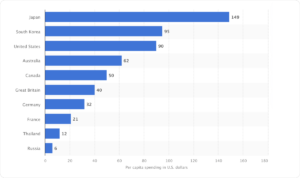
    After creating and optimizing your app store listing in English, the next step in expanding your app’s availability and attracting users from other regions is to consider localization and keyword promotion for Asian markets. With Asia leading in year-over-year growth in mobile spending per capita and languages such as Korean and Japanese being widely used, optimizing your application for countries like Japan and South Korea can bring in a significant portion of revenue. 

    Leading markets worldwide based on mobile spending per capita, provided by Statista

    However, it is important to approach App Store Optimization correctly in order to achieve the maximum impact. This article will focus on how to effectively optimize your app for the Japanese and South Korean markets, which have seen a rapid increase in active users and mobile app spending.

    Optimizing for Success: Navigating the Unique Challenges of App Store Optimization in Japan

    When it comes to App Store optimization, the first step is often keyword research. There are numerous articles on gathering keywords for your app that will assist you in doing so correctly. While this process may be relatively straightforward for languages such as English, it can be much more challenging for languages that are not as widely spoken or understood. This is particularly true for Japanese, which is known for its complexity and the use of multiple writing systems, including hiragana, katakana, kanji, and romaji.

    For app developers and marketers, the challenge of optimizing for Japanese lies in the fact that there are multiple alphabets and writing systems in use, each with its own unique characteristics and nuances. This can make it difficult to accurately gauge keyword popularity and traffic, as a word written in one alphabet may be completely different from the same word written in another.

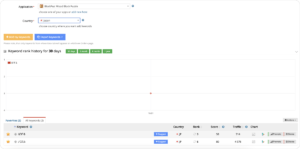
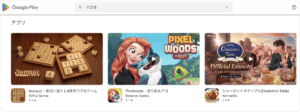
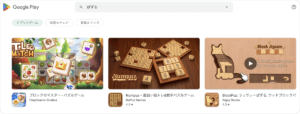
    For example, the keyword “puzzle” in English may have several different variations in Japanese. In the Japan Google Play store, the keyword “パズル” (written in Katakana) is more popular and has higher estimated traffic than the keyword “ぱず” (written in Hiragana), even though the two words are pronounced the same in Japanese. This highlights the importance of understanding the different writing systems and alphabets used in Japanese when conducting keyword research, as well as the need to consider multiple variations of a given keyword.

    Overall, optimizing for the Japanese market requires a more thorough and nuanced approach than for other languages and regions. App developers and ASO marketers should be prepared to invest the time and effort necessary to gain a deep understanding of the language and its various writing systems in order to maximize the impact of their optimization efforts.

    Example of search volume and estimated traffic for several ways to say “puzzle” in Japanese with the help of free ranks checker for keywords on keyapp.top platform

    When optimizing your app for Japan, it is important to take into account the different types of writing used in the language. Japanese uses hiragana, katakana, hieroglyphs (kanji), and romaji (latin), making it one of the most difficult languages to learn. This can make keyword research challenging, as there may be multiple ways to write the same word in different alphabets. For example, the keyword “puzzle” may be written as “パズル” in Katakana or “ぱずる” in Hiragana, and while they are pronounced the same, they have different popularity scores and estimated traffic.

    “ぱずる (puzzle)” written in Hiragana

    “パズル (puzzle)” written in Katakana

    Additionally, the search list for keywords that are written differently but have the same meaning can vary. For example, searching for “puzzle” in Hiragana may yield a different list of results than searching for “puzzle” in Katakana. Therefore, it is important to include multiple variations of a word or phrase in your metadata to ensure your app is visible to Japanese users.

    Japanese users typically use Hiragana when searching for apps on Google Play or the App Store, but it is still important to include both Hiragana and Katakana variants of keywords in your metadata. Overall, when optimizing your app for Japan, it is essential to consider the complexities of the language and be mindful of different variations of keywords to ensure your app is visible to Japanese users.

    Japanese users typically use Hiragana when searching for apps on Google Play or the App Store, but it is still important to include both Hiragana and Katakana variants of keywords in your metadata.

    1. Gather both the keywords in Hiragana and Katakana for Japan locale.

    To optimize your app for the Japanese market, it is important to conduct keyword research in both Hiragana and Katakana. By gathering search requests in both scripts, you can ensure that you are covering all possible variations of a word and not missing any potential keywords. Additionally, the character limits for metadata fields in the App Store and Google Play for Japan are the same as in English, but you can use more keywords due to the compact nature of hieroglyphs and the lack of spaces between them, allowing you to use a higher number of search requests and increase your chances of being indexed. For example, the keyword “dating” takes 6 characters in English but only 2 in Japanese “日付” which saves space in the keyword field on the App Store.

    2. Verify machine translations with the aid of English-Japanese dictionaries, as Google Translate often inaccurately translates into Japanese.

    When translating words from your primary language to Japanese, the meaning may vary, and Google Translate often defaults to using Katakana instead of Hiragana, which is commonly preferred by organic users for searches on app stores. For instance, for the keyword “drifting” in English, Google Translate shows “ふわっと” in Katakana, while in Hiragana it is “漂流”.

    3. Consider the Japanese chronology in your localization efforts.

    When localizing your app for the Japanese market, it’s important to keep in mind that the Japanese use a different chronology system that is based on the eras of the emperor’s reign. While the standard chronology used in other countries is also understood by the Japanese, it’s best to take this cultural aspect into consideration for a more complete localization.

    When localizing your app for the Japanese market, it’s important to keep in mind that the Japanese use a different chronology system that is based on the eras of the emperor’s reign.

    4. Be mindful of the meaning of numbers.

    In Japan, certain numbers have a specific meaning and are considered unlucky. These include 4 (associated with death), 9 (associated with suffering), and 13 (associated with failure). To avoid any potential negative impact on your app’s conversion rates, it’s important to avoid using these numbers in your text or visual optimization. Even small details like this can have a significant impact on the amount of organic traffic your app receives in Japan.

    Here is a good example of the app icon, which, most probably, was created according to the Japanese beliefs in numbers; figures such as 4, 9, and 13 are avoided.

    5. Tailor your visual optimization to Japanese trends.

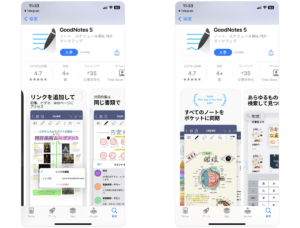
    When designing your app’s icon and screenshots, it’s common to aim for minimalism and include only essential details for users. However, in Japan, users tend to prefer having all the information they need in one place. This applies to app screenshots as well. Don’t be afraid to include detailed information and written descriptions in your screenshots, as minimalism may not be as well-received by Japanese users.

    Examples of app screenshots for Japan localization

    6. Use Japanese models in app screenshots.

    When localizing your app screenshots for Japan, it is beneficial to use Japanese models. This makes the app more appealing to users and gives the impression that the app was specifically designed for the Japanese market. This concept applies to games as well, as incorporating manga characters can be particularly appealing to Japanese users of all ages. As an example, here’s the YourCam app, optimized for the US and localized for Japan.

    Optimizing your app for the South Korean market

    As one of the top-performing regions for app developers, South Korea is a valuable market to consider for localization. The official language of South Korea is the Seoul dialect, and it is important to note that the writing system used in the language is not hieroglyphic but a combination of letters forming syllables. To effectively optimize your app for the South Korean market, here are a few tips to keep in mind:

     1. Use a mix of English and Korean keywords in your research.

    Many Korean users understand English and may use English keywords when searching for apps. By including both English and Korean keywords in your research, you can gain a better understanding of the popularity of specific keywords and use them in your text metadata and promotion efforts.

    2. Fully translate your app into Korean.

    To attract organic users and receive positive ratings and reviews, it is important to translate not only your text metadata and app screenshots but also the entire app itself. Keep in mind that localization is not only about translation but also adapting your app to the needs of the Korean market.

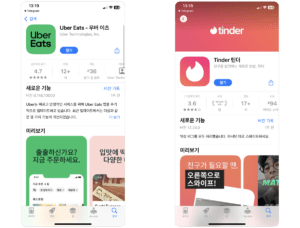
    Consider translating your app’s brand name. Many apps have English names that are widely recognized, but for localization in South Korea, it may be beneficial to translate your brand name as well. Companies like Tinder and Uber Eats have done this to effectively target the Korean market.

     3. In screenshot optimization, use complex and anime-inspired designs rather than minimalist and realistic ones. 

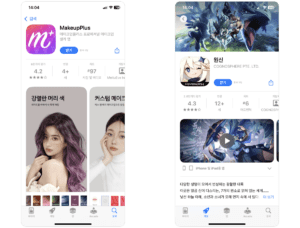
    Koreans highly value images that have a Korean aesthetic. Localizing UIs and using Asian models in your creatives can make them more appealing to Korean users. In the case of games, using a cute manga and/or anime style called Aegyo that is popular in Korea, such as Kawaii in Japan, can make them more appealing to Korean users. Keep in mind the meaning of color as well, as some colors have positive meanings, such as white, green/blue, and yellow, while others have negative meanings, like black and red.

    Examples of app visuals localized for Korea

     4.Stay up to date with current trends in icon creation for your app in Korea.

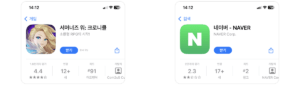
    In gaming applications, the trend is to show a popular hero on the icon. For non-gaming applications, the trend, like in China, is to use the brand name on the icon but not in its entirety, for example, by using only the first letter, like the local player NAVER with a simple letter N on the icon.

    Keyword Promotion Case Study: Strategies and Results for Japan and Korea

    As you can see, the Asian market for apps is quite different from the US or European market, and this is particularly evident in text and visual optimization, where different colors and trends are used to attract the maximum number of organic users.

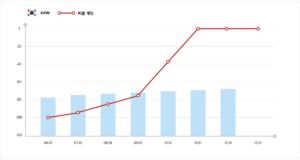
    To understand how to choose the right strategy for keyword app promotion in Japan and Korea, let’s examine some examples of keyword promotion that I did. For example, in Korea, Google Play was used to promote the keyword “퍼즐 게임” (puzzle game). The promotion began at rank 101. Within 7 days, 595 installs were used, starting with 70 installs on the first day and ending with 100 installs on the last day of the promotion. As a result, the app achieved rank 1 for the keyword.

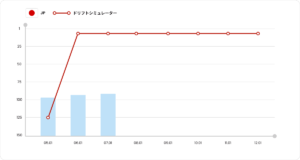
    Next, let’s examine some examples of keyword promotion in Japan. The keyword I promoted is “ドリフトシミュレーター” (“drift simulator“). The promotion began with a rank of 125. I set the order for 3 days with 80 installs per day. As a result, I managed to achieve a top 5 ranking for the keyword within 2 days.

    Summary

    These examples demonstrate that with proper App Store Optimization in Asian countries, it is possible to achieve high rankings for keywords, even for popular search requests. When optimizing your app for the Asian market, it’s crucial to not only translate the metadata and app text, but also to localize the app to align with local trends.

  • What are the benefits of social media marketing?

    What are the benefits of social media marketing?

    What are the benefits of social media marketing?

    Social media marketing has become an essential tool for anyone wanting to promote a niche product or service. Social media is effective for growing revenue, boosting brand awareness, building your brand’s image and giving your brand a chance to go viral. Many social media agencies in London offer services to help you scale your social presence. Partnering with such agencies will alleviate some of the problems inexperienced marketers may encounter while starting out on social media. And will help you achieve bigger goals faster. In this article, we will discuss some of the benefits social media can provide for your company.

    Reach your audience where they are

    Social media platforms provide an excellent opportunity for businesses to connect with their target audience, where they spend most of their time online. By establishing a strong social media presence, companies can make it easier for their customers to discover their products, services, and valuable information. When customers engage with a business’s social media account by liking, retweeting, or following them, it indicates a genuine interest in their offerings. Therefore, social media marketing is an ideal way to capture the attention of potential customers who are already aware of the business’s quality and value proposition. This way, businesses can build brand loyalty and increase the likelihood of future sales. Overall, social media is a powerful tool that businesses should leverage to expand their reach, increase customer engagement, and drive business growth.

    It’s cost-effective

    One of the main benefits of using social media as part of your marketing efforts is how little you actually have to spend to get results. You can start small and increase your budget along with the growth of your company. This is especially cost-effective compared to traditional advertising, such as billboards and television.

    Social media is especially valuable for getting your products and services in front of audiences who have yet to become familiar with them. Because of the incredible variety of platforms available at the moment, such as Facebook, Twitter, Instagram and Pinterest – there really isn’t any reason to stick to one. And because of how cheap it is to advertise on them, you can freely experiment until you find the right one for your audience. The platform could not work well for whatever reason (maybe it isn’t used by your target audience, or maybe you want to make specific content, such as images rather than text). Don’t stress, and just try another one!

    You get instant feedback from existing and potential customers

    Social media provides an unparalleled opportunity for small businesses to engage with their customers and establish strong relationships with them. By leveraging social media platforms, businesses can address customer inquiries and concerns in real time, which fosters trust and builds a loyal customer base.

    Additionally, social media offers a valuable avenue for businesses to solicit feedback on their products or services and gauge overall customer sentiment. This feedback can be invaluable for businesses seeking to identify areas of strength, areas of improvement, and potential gaps in their customer service. By leveraging the insights gained from social media interactions, businesses can continually improve their offerings and customer experience, leading to increased customer satisfaction and, ultimately, business success. Overall, social media is an essential tool for small businesses seeking to establish a strong presence and build lasting relationships with their customers.

    Measuring the success of your campaign is really easy

    Measuring your success is one of the biggest advantages of carrying your campaign on social media. This data will come in handy for future campaigns, where you will be able to tweak messaging and executions and hopefully achieve better results. Unless your product isn’t actually valuable to your audience (in that case, the campaign can’t do miracles), then there are numerous ways to make sure they get their hands on what they need from brands like yours!

    The benefits of social media marketing include:

    ● Reach new audiences and potential customers via social media in order to promote your brand or business.

    ● Grow revenue by using social media’s full potential to sell products or services online.

    ● Improve your products and services by listening to the direct and real-time feedback you receive from your customers.

    Conclusion

    Social media marketing is an effective strategy for businesses seeking to expand their brand, reach new customers, and boost revenue. With numerous social media platforms available, businesses can connect with their target audience directly, where they spend most of their online time. Additionally, social media platforms offer analytical tools such as Facebook Insights and Twitter Analytics, which enable businesses to track the effectiveness of their campaigns and make necessary adjustments in real time. By utilising these insights, businesses can optimise their social media marketing efforts and achieve their goals. With the ever-increasing importance of social media in today’s digital landscape, businesses that embrace social media marketing will undoubtedly have a competitive edge and experience greater success.

  • Start A Marketing Strategy For Your Construction E-commerce Website

    Start A Marketing Strategy For Your Construction E-commerce Website

    E-commerce is rapidly changing in the construction industry. Ecommerce websites offering construction products have seen an increase in popularity in recent years. This is because contractors can easily make purchases from the convenience of their own homes. In 2019, there was an increase in the number of eCommerce websites selling these products. It’s easy for contractors to order tools from their homes. Although it’s easy to create an eCommerce website, it’s important to have a solid marketing strategy in order to make it successful. How do you create a strong marketing strategy for your new E-commerce site? Below are some marketing strategies:

    1. Optimize Your E-commerce Website For Searches

    Your E-commerce website’s SEO will give you an advantage over other websites. Optimize not only the website but also individual product pages using the correct keywords and related LSI keywords.

    Make sure you are specific about your product name and title. A detailed 800-1200-word description of the product can be written and used on the product page. You can use online tools such as Ahref, Google Keyword Explorer, and Ubersuggest to locate the keyword sets. Your prospects will be more inclined to click on the first results in search results. Ask customers to leave reviews, and optimize the page with them. Customers don’t buy without reviewing products, no matter if they’re a building tool or a cream for their skin.

    1. Make A Unique Selling Proposal

    Why would a customer choose to buy from you? This is the question that you should ask. The construction industry still faces many challenges when it comes to e-commerce. You need to be careful about what your USP is.

    If you’re dealing with interior design products and home decor, customization can be your USP. A customized product line will be a great idea. Because the product is customized to their needs, this will help build brand loyalty and increase return customers for repairs or repurchases. They will also be willing to pay more for customization.

    This is only one example. You can also offer something unique to your customers for your product lines, which will make them feel like they are purchasing something special. We have found that minor changes to your selling proposition can result in more sales.

    1. E-commerce Is All About The User Experiance

    Your E-commerce store will only be a choice for people who feel that the transaction is smooth and they won’t have to return any money. A perfect e-commerce website design is key to providing a great user experience. Users will prefer a clean-looking website that loads quickly and displays clear images of the products with a concise description.

    Hire an experienced eCommerce website designer if you feel your construction website isn’t up to standard. You should not rush to develop your eCommerce website. This could cause you to miss important information and functionality. There is no perfect design, and there are many opportunities to improve upon it.

    1. Social Media Marketing To E-commerce

    Social media publicity is a key part of any construction marketing strategy. Social media is a key tool for promoting your brand and products. Although you can use Amazon ads and Google Ads to increase sales, social media advertising is essential. There are many social media platforms available, depending on your brand’s needs.

    Facebook is the dominant social media platform for e-commerce marketing. This is due to the large number of people who use Facebook or Facebook-owned Instagram. Small and medium-sized businesses can run ads on the platform and communicate with customers thanks to the large audience. Facebook and Instagram both allow product sales from their platforms. This is a great way for businesses to show products, offer customer service, drive traffic and increase brand awareness. Facebook is the best marketing tool for your e-commerce building brand.

    1. Remarketing Or Retargeting

    After a user visits your website and shows interest, you can make a sale by retargeting them via Facebook ads or Google. Below is a list of customer segments that can be targeted with retargeting:

    • People who have bought from you in the past.
    • Your email subscribers.
    • Lookalike audience on Facebook
    • Customers who have stopped using the e-commerce website of your company or are no longer members.
    1. E-mail Marketing Is A Way To Target Visitors.

    Do you want to get the most out of every visitor to your eCommerce website?

    A pop-up can be added to your website to solve this problem. The pop-up will prompt your visitor to enter his/her email. Any tool that allows you to collect email addresses can be used by a construction marketer to maximize the value per visitor. The email list will grow, which will allow more customers to be reached, increasing sales and decreasing cart abandonment. This will convert website visitors to customers. abandonment rate.

    1. Create An App

    Although it may sound a little technical, a mobile app can be a key part of your marketing strategy. Why should you have an app? Mobile users have been increasing year on year with the introduction of smartphones. Mobile users prefer to access the internet via their smartphones over tabs or laptops. Mobile apps are simple to use and can be beneficial to e-commerce websites in many ways.

    It makes it easy for users to access the app from anywhere and anytime. Push notifications can be used to increase impressions, keep customers engaged, and build an e-commerce business.

    1. Ask The Experts To Speak For You

    Influencers can be helpful for fashion and lifestyle, but also construction. General contractors, CEOs, MDs, and business owners have created their own brands through social media. Many of their followers love them on Instagram and Facebook and can also help you by sharing your brand via a post or video. This will lead to brand building and eventually sales, although it won’t happen immediately. This strategy is certain to work when the entire construction industry depends more on trust and old bonds.

    Conclusion

    A lot of responsibility comes with an E-commerce website. A single wrong delivery can cause brand damage. It is possible for customers to rant on Twitter and Facebook about the delivery, or even leave a negative Google Review. It is important to ensure that the website’s e-commerce development process is as smooth as possible and provides the best possible user experience.

    When planning a marketing strategy for a new E-commerce site, it is important to remember that social media must be used more carefully. You can use social media to address the needs of buyers and users, promote the brand, and sell products on Facebook, Instagram, and other social media platforms. You should not neglect traditional digital marketing strategies such as SEO, content marketing through blogs, or Google ads. These are all great ways to promote your brand, increase sales, and fetch leads.

    This post was written by a specialist at Contractor Marketing Gurus. With countless case studies, client testimonials, and references we have proven time and time again to achieve the best results in the contracting space! Contractor Marketing Gurus was formed to help contractors in the home improvement industry increase their online visibility to generate more leads and sales. For more information click here!

  • First Impression Matters. Especially when It Comes To Your Website.

    First Impression Matters. Especially when It Comes To Your Website.

    The first impression, as they say, is the last impression. This is true when it comes to helpful web design tips. It is because when a user comes to your website, the first thing they see will determine their entire experience. If your website is not able to perform well during the first few opening seconds, you will lose not only valuable visitors but also the opportunity to establish an effective brand memory that can generate sales and create interest in the long run.

    There are various factors involved when it comes to creating the best first impression. Collaborating with website designers who realize these factors is important to developing an attractive and professional-looking website. Visual elements, for instance, the colors, structure, and spacing, are usually considered very important in website design appeal. Simultaneously, the features that we often overlook, such as fonts and text layout, also impact the on-site engagement and experience.

    Having a web designer that carefully considers these details and gives importance to these factors leads to a more attractive looking website, turns more visits into prolonged stays, and provides users with amazing web pages and the experience they need in order to stay on your website and make purchases from your business.

    We asked Effective Marketing & Design to share their thoughts on the most important things a website needs in order to leave a great first impression.

    • Simplicity: Most of the users out there like simple web designs in comparison to complex ones. They want to engage with the visual elements on your web pages effortlessly. Therefore, make it simple and straightforward.
    • Familiarity:Things such as visual elements, logos, headers, stock photos, and CTAs, are required to be meeting the expectations of visitors. They must tell them about what you offer. In case the aforementioned elements do not meet the expectations of your visitors, it will only result in confusion and a negative brand image.
    • Accuracy: Preciseness and accuracy are one of the most important things. Everything and all types of features must be accurate and should reflect your brand when people visit your website.

    In addition to all this, you need to reduce your load times. “Having a slow website can prove to be detrimental for you, making it difficult to keep your prospect sticking to your website and purchasing something from there. Most of the top-notch websites today load fast, and a lot of Internet users expect this from your website as well. Believe me or not, if your blogs or homepage are not going to load faster, your prospects will leave your site and will look for a solution at someone else’s site,” – says Anastasia Enikeeva, Wix Website Designer at Effective Marketing & Design.

    In a nutshell, the loading time of a website is the most crucial and important element of any responsive and practical design effort. It certainly affects the overall experience of your visitors and, ultimately, your ability to convert them. It should never be compromised and ignored and must always be the first priority of a web designer while developing a wonderful site design.

  • Why SEO Services Are Not a Quick Fix for Your Site

    Why SEO Services Are Not a Quick Fix for Your Site

    You invest a ton of time, money, and energy building what you believe to be a high-quality website more than capable of representing your company. You expect the site to attract plenty of paying customers – but it doesn’t. Then, out of the blue, you get an unsolicited email from an SEO services provider who claims to love your website. The provider also promises to fix what is broken.

    Be careful. High-quality SEO services can help your website perform better. But they are by no means a quick fix. SEO services are also limited in what they can do. If you are planning to invest in them, go into it with realistic expectations. Do not expect your SEO provider to work miracles.

    Here you can go to learn more about the masstamilan

    If You Need More About This Site : f95zone

    If You Need More Information Visit This Link : dcrazed

    For More Details Check This Link : f95zone

    What SEO Does

    The SEO acronym stands for ‘search engine optimization’. That right there tells you its main purpose. In a nutshell, SEO’s main function is to improve how well a website performs on the major search engines. Ideally, you want your site to appear on the first page of search results for a particular set of keywords. If it doesn’t show up on the first or second page, users will probably never find it.

    According to Webtek Digital Marketing, most SEO firms these days do not limit themselves just to that one discipline. They embrace a full menu of disciplines that all combine to create a comprehensive digital marketing strategy. This is to say that SEO services are often combined with content marketing, web development services, social media marketing, etc.

    SEO Needs Time to Work

    Now that you know a little bit more about what SEO actually does, it is time to address why it isn’t a quick fix. There are many reasons, beginning with the fact that SEO needs time to work. It takes time for web crawlers to recognize changes to your site. It takes time for algorithms to account for those changes and adjust its ratings accordingly.

    In 2017, Google’s Maile Ohye said that it takes between 4 and 12 months to start seeing the benefits of SEO improvements. Properly implemented SEO starts working right away, but you don’t see the benefits instantly.

    Traffic Is Just the Start

    As a business owner, you need more than just traffic. In fact, traffic is just the start of the selling equation. What you need is traffic that generates sales. And to do that, you have to be able to convert casual visitors into paying customers. This is yet another reason SEO services are not a quick fix.

    SEO services can drive traffic to your website. But what happens when visitors get there? Do they stick around long enough to make a decision about your products and services, or are they gone in under 10 seconds? This is where web development becomes important.

    Visitors need to have a positive experience on your site, or they will not buy. They also will not tell others to buy from you. So if you’re going to invest in SEO, be prepared to invest in web development as well. The two go hand-in-hand.

    Remember the Competition

    As you ponder all of this, do not forget the competition. SEO is not a quick fix for the competition beating you at every turn. You can eventually win against your competitors, but you’ll need a long-term marketing plan and a solid digital marketing partner to help you.

    SEO services are absolutely necessary. But they are not a quick fix to a website that isn’t producing results. Remember that SEO is about traffic. Selling is about converting that traffic into paying customers.