Category: Home Improvement

  • Emergency Repairs: What to Do When Your Water Heater Fails on a Weekend

    Emergency Repairs: What to Do When Your Water Heater Fails on a Weekend

    There’s never a good time for your water heater to quit, but somehow it always seems to happen at the worst possible moment – like late on a Saturday night when you’ve got guests staying over. Suddenly, there’s no hot water, the dishes pile up, and cold showers become your only option. At that moment, most homeowners rush to search water heater repair near me and hope for a fast solution. The good news? You’re not powerless. There are a few steps you can take to stabilize the situation until professional help arrives.

    Step One: Don’t Panic – Do a Quick Check

    When your water heater fails, the first reaction is often stress. But sometimes the fix is simpler than you think. Start by checking the basics:

    Power source – If you have an electric unit, see if the breaker has tripped. For gas heaters, check the gas supply and ignition system.

    Thermostat settings – Occasionally, the thermostat gets bumped or reset. The ideal temperature for most households is around 120°F (49°C) to prevent scalding while remaining energy efficient.

    Pilot light or ignition system – If you have an older gas unit, verify that the pilot light is still lit.

    These quick checks won’t solve every issue, but they might save you from a night of freezing showers. According to the Insurance Institute for Business & Home Safety (IBHS), about 70% of water heater failures are caused by slow leaks or sudden bursts, so it’s a good idea to know what to look for before a major problem happens.

    Step Two: Contain Any Leaks

    If your water heater failure comes with puddles on the floor, you’ll want to act fast. Shut off the water supply to prevent flooding, and if it’s safe to do so, cut the power or gas supply as well. Place towels or a bucket under the leak to reduce damage. Even a small leak can escalate into a costly mess if ignored over a long weekend.

    Water heater failures are the second-leading cause of residential property damage. IBHS data shows that the average water heater failure claim costs homeowners about $4 444, making swift action essential to minimizing damage and repair costs.

    Step Three: Know When to Call in the Pros

    Not all problems can or should be handled alone. A broken heating element, damaged thermostat, or internal tank issue isn’t a DIY project it requires trained hands. If your quick checks don’t restore hot water, it’s time to call in a professional repair service. Many reputable companies offer 24/7 emergency support, meaning you don’t have to wait until Monday to get help.

    A professional can accurately diagnose the issue and determine if it’s a minor repair or a sign of a larger problem. For example, a professional plumber can identify if a leak is from a simple fitting or a sign of a corroding tank, which is a much more serious issue. Up to 30% of water heater failures are linked to improper installation, so ensuring you have a qualified professional from the start is critical to preventing future headaches.

    Step Four: Prevent Further Damage

    While you wait for repairs, there are a few things you can do to keep the situation under control. Avoid using appliances that rely heavily on hot water, like dishwashers or washing machines. If your tank is leaking, keep the surrounding area dry and safe. Taking these precautions won’t restore your hot water, but it will keep the problem from spiraling out of control.

    Step Five: Think Long-Term Solutions

    Weekend water heater failures are stressful, but they’re also a wake-up call. If your unit is over 10 years old or breaking down repeatedly, repairs may not be the most cost-effective solution. Replacing it with a new, efficient model could save you money on both repairs and energy bills in the long run. A technician can help you weigh your options and decide whether it’s time for a full upgrade.

    The average lifespan of a traditional tank water heater is 8-12 years, while tankless models can last 20 years or more. Choosing a new, energy-efficient model with an ENERGY STAR® certification can reduce your water heating costs by a significant amount over its lifetime. In fact, water heating accounts for about 13% of an average home’s energy costs. Upgrading to a more efficient model can make a noticeable difference in your utility bills.

    When you’re ready to replace your unit, consider the following:

    • Fuel source: Electric, gas, heat pump, or solar? This choice depends on your home’s infrastructure and local utility costs.
    • Capacity: How much hot water do you need? A larger household might benefit from a bigger tank or a tankless model to avoid running out of hot water during peak usage.
    • Efficiency: Look for the Energy Factor (EF) or Uniform Energy Factor (UEF) rating. The higher the number, the more efficient the unit.

    Are you thinking about a full replacement, or do you believe your water heater can be repaired?

    Final Thoughts

    A weekend water heater breakdown can throw your household into chaos, but with quick checks, leak control, and a call to a trusted repair service, you can get things back on track faster than you think. Don’t ignore the warning signs, and don’t wait until Monday if the issue is urgent – professional help is only a call away.
  • Roofing: from aesthetics to function

    Roofing: from aesthetics to function

    The roof is an important part of the building, which crowns it like an elegant crown. But the roof is also almost the most important functional component of the building project – it must be durable, meet the requirements of operation and not create an unnecessary load on the entire building as a whole. And if the roof is arranged incorrectly, then the house eventually ceases to be suitable for housing. What should you focus on when choosing a project and roof materials? Geometric shape, operational characteristics, roofing material – the list of parameters that you need to pay attention to when choosing a roofing project is not so long, but all these points are equally important.

    Variety of forms

    The geometry of the roof is dictated by the functional purpose of the cottage under construction and the wishes of the owners. First of all, roofs are divided into pitched and flat. The latter is a mandatory attribute of houses of wealthy people and the dream of many of our compatriots. Unfortunately, the climate does not allow us to build a full-fledged terrace, swimming pool or helipad on the roof, and those who do decide on such architectural masterpieces will have to face very high requirements for waterproofing, cleaning problems and other difficulties of northern latitudes.

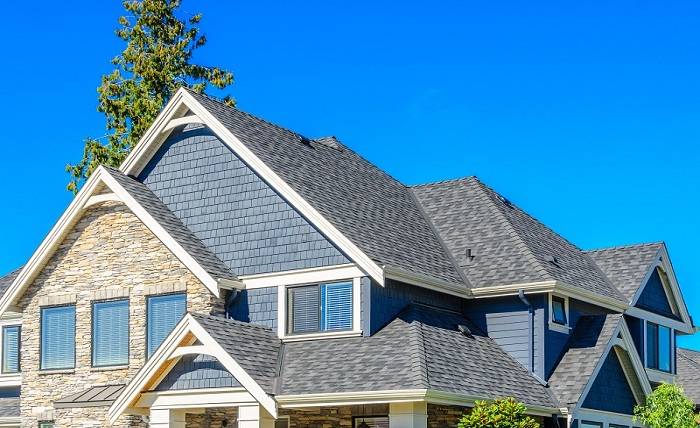
    In this regard, the most popular projects of houses in our country are with pitched roofs, on which precipitation does not linger for a long time, and, therefore, their tightness is much higher. Here there are many options, each of which satisfies one or another need. So, a single-pitched roof is mainly used for outbuildings: sheds, garages, baths. It is easy to build, and rain and snow will flow only in one direction. A gable roof is usually used for residential buildings (the attic under it is more often used for economic purposes). And lovers of attic rooms prefer broken roofs, which consist of two slopes on each side, mounted at different angles. This makes it possible to expand the room to make, for example, a full-fledged bedroom there.

    More than four scats have multi-gable roofs. The need for them is due to architectural difficulties: variable stories, asymmetry of the building and other functional features. Dome and spire structures are used most rarely in low-rise residential construction. Each type of roof differs in the number of necessary materials for its construction, as well as the design of the rafter system.

    We set priorities

    The roof, more than all other parts of the building, is exposed to natural factors, which are aggravated by some anthropogenic influences. She has to withstand rain, wind, snow, meltwater, sun, constant temperature changes, and steam. The roof should also protect against increased noise and be as safe as possible in operation.

    Even though the aesthetic appeal of the roof has an undoubted influence on the choice of the entire structure and finishing materials, it is necessary to pay more attention to the operational characteristics of this part of the building. The most important parameters are strength, high-quality heat and sound insulation, vapor and moisture resistance, environmental friendliness and safety.

    It must be remembered that the greatest load on the roof occurs in winter (due to the high-temperature difference and humidity level outside and inside the house). Based on this, the material suitable for this area is selected. And, choosing between beauty and durability, it is probably better to choose favor of the latter, because the house is built for more than a dozen years. But since problems arise in any, even the most well-thought-out design, it is important to notice them in time. Yes, the rafters can crack, which requires a more thorough inspection of the roof – it may need major repairs. Since the structures are constantly exposed to moisture, steam, and temperature changes, there is a high probability of fungi. You can notice this in the changed color of the beams and changes in geometry. Special antifungal mixtures and solutions cope well with this problem. The protective layer of the roof can shift or receive mechanical damage, as a result of which leaks will form during rain and wet marks will appear. Timely elimination of such manifestations will avoid the repair of the interior decoration of the room.

    Roofing cake

    The roof is a multi-layered structure, each layer of which has certain operational problems. Installation begins with the laying of a support beam, which is called a “Mauer last”. Rafters are installed on it and a waterproofing film is laid. It allows vapors to leave the room, but does not allow moisture from the street into the thermal insulation layer. Then, a crate bar is placed perpendicular to the rafters, as a result of which an air gap is formed between the roofing material and the waterproofing layer, which also contributes to the removal of excess moisture.

    Some materials require a solid batten, such as soft bituminous roofing, reed or sheet steel. In this case, no beams are used, but OSP boards or moisture-resistant plywood. Then there is the fastening of the roofing material, the features of which depend directly on the chosen option. Before buying, it is necessary to determine the total area of ​​the entire roof, including bends and overhangs. For complex architectural solutions, it is better to use flexible tiles, which will reduce the amount of waste.

    When the external work is finished, you can proceed to the insulation of the roof from the inside. Between the rafters it is necessary to lay the insulation very tightly, and on its inner side to provide a vapor barrier (usually reinforced polyethylene is used for this). The most difficult places during the installation of all layers are, of course, windows, risers and heating pipes. It is necessary to pay enough attention to their waterproofing, vapor barrier and insulation, so that in cold weather the heat does not disappear through poor-quality joints.

    As for the flat roof, its base must be rigid, otherwise the waterproofing may be broken, which will lead to constant leaks. A concrete screed or, for example, corrugated board is suitable for the foundation. Flat roof insulation must have high compressive strength, as it will be constantly subjected to loads. In addition, to solve problems with waterproofing on these types of roofs, aerators are used – structures made of pipes of different diameters, which allow excess steam to be removed due to the pressure difference.

    How to hide?

    Among the variety of roofing materials, metal tiles are the most popular . It is made of galvanized steel, protected on both sides by a polymer coating. The main advantages are economy, lightness, resistance to external influences, aesthetics. Such tiles are inexpensive, and their service life is very long, which is especially attractive in the long term. The lightness of the material makes it easier to ensure its installation and transportation, and also reduces the load on the foundation.

    The metal tile is used in different climatic zones, it is resistant to natural phenomena, and mechanical damage is easily eliminated by replacing the damaged segment. And finally, very favorable material for an architect. In addition to the variety of colors, it also allows you to choose different configuration options.

    There are two downsides to this option: large losses when installing complex roofs and weak noise insulation. Therefore, it is best to use such tiles for simple roofs, and the second problem will be solved by an appropriate lining.

    When buying, it is important to pay attention to the quality of the material, since unscrupulous manufacturers, to save money, often reduce the thickness of the product, the number of layers of polymer coating and do not use a primer. All this will lead to the fact that the roof made of metal tiles will lose its presentable appearance after a couple of years, fade and become covered with rust.

    The second popular material is ceramic tiles . This is the most ecological version of the coating, in addition, it has low thermal conductivity (the house will not heat up quickly in the heat), has good vapor permeability (eliminates dampness) and perfectly absorbs noise. In addition, ceramic tiles are fire-resistant and durable – their service life is more than 100 years. The problem with this material is its heavy weight: 40-70 kg per 1 square meter, so during installation it is necessary to additionally strengthen the entire structure. Cement-sand and polymer-sand tiles are similar in properties, but lighter in weight, and can become a worthy substitute for ceramic tiles.

    The third option is bitumen tiles . Lovers of architectural extravagances will be pleased with such a flexible tile with a large number of colors and ease of use on various curved surfaces. As for functionality, it is not as durable as the previous ones, but it has good water resistance and tightness of the joints. A roof with such tiles is practically silent and cannot be compared to any other option during the rain. Bituminous roof tiles do not fade or rust, but they cannot be subjected to minor repairs: since the sheets are fused, a significant piece has to be changed, and sometimes the entire slope as a whole.

    Among the less popular varieties of roofing materials is metal sheet roofing, which is used mainly for commercial buildings: it is cheap, durable, but has poor sound insulation. Natural materials – reeds, turf, wood chips – are often used to attract attention to the construction, but they are short-lived and fire-hazardous. This material is made by hand (it is quite heavy).

    In general, when choosing a suitable material, it is better to focus on the first three types, which have already firmly established themselves on the market.

    Finally, siding contractors in kc will emphasize once again: for house projects to turn into realized dreams, do not succumb to temptation when choosing the shape of the roof. In order not to be left with rusty sheets or the need to constantly cover large areas after several years of operation in the pursuit of effectiveness, you proceed from the durability, quality and efficiency of the construction itself and roofing materials. And then a strong roof over your head is guaranteed for many years!

  • Trends in bathroom lighting — fashionable and functional solutions

    Trends in bathroom lighting — fashionable and functional solutions

    The bathroom is a room where lighting plays a very important role, especially when there is no access to daylight. Even if your bathroom has a window, you probably often close it with blinds. After all, everyone wants to feel free in the bathroom, and the feeling of security and intimacy is very important. As you can see, good lighting is important here. So how to design bathroom lighting so that it fulfills all its functions and is maximally functional? We talk about this in our article.

    HOW TO PROPERLY ORGANIZE THE LIGHT IN THE BATHROOM?

    Functional bathroom lighting should consist of several elements:

    1. first of all, the central lighting of the bathroom is important, since such a lamp should evenly illuminate the entire ceiling, walls and hidden corners;
    2. secondly, the lighting of important functional areas. This group includes wall lamps installed above the mirror, or spotlights in the bathroom that illuminate the shower cabin and bathtub;
    3. the last type is decorative lighting. These are gentle wall or pendant lamps installed above the countertop in the bathroom. If you care about the correct, but also elegant lighting of the bathroom, each of the three types of lamps should be included in your project.

    It is important to choose lighting in the bathroom during shower remodeling sacramento according to the square footage of the room. In a bathroom with an area of ​​6 square meters, one ceiling lamp with a 75 W lamp is enough. However, if your bathroom is larger than 10 square meters, there should be several light points on the ceiling with 50W lamps. This makes it possible to evenly illuminate the entire room.

    Of course, this is the power of traditional light bulbs. When choosing LED light sources, it is necessary to choose equivalents with lower consumption, but with similar efficiency. Don’t worry, you don’t need to be an expert. Information about the power of a traditional light bulb corresponding to the LED model is available on the packaging of LED bulbs. There is also information on the color of the light on the package – for the central lighting of the bathroom, it is better to choose those with a colder shade.

    CENTRAL LIGHTING IN THE BATHROOM

    Ceiling lights are used for central bathroom lighting. This is the best choice for many reasons. First of all, they take up little space and do not interfere with everyday use of the bathroom. Imagine that you touch a hanging chandelier by throwing a towel over your head. It wouldn’t be very convenient.

    Of course, you can choose this type of lamp or a classic chandelier – this is one of the trends of recent seasons, but remember that it will work only in high and spacious bathrooms. In small rooms, such lighting can overload the interior and optically reduce it even more.

    HOW TO CHOOSE THE RIGHT CEILING LAMP?

    You should remember that the lighting in the bathroom is not only decorative, but above all it should be functional. That’s why you need to remember several aspects:

    • The bathroom should be evenly lit. This is especially important during daily make-up, shaving or washing. That is why the light must be very well diffused. Choose lamps in the bathroom with a closed lampshade, preferably made of opal glass, which will perfectly cope with the uniform lighting of the entire space. If you don’t like glass, there are many shades on the market made of frosted plastic, which perfectly mimics frosted glass.
    • The color of the frame – unlike the appearance, this is a very important aspect. Very often, bathrooms are small rooms that need a lot of light, and dark lamps can take up a large part of it. A good solution is to choose a metal chrome frame, which additionally reflects light rays. Chrome or trendy gold is a good choice for the bathroom.
    • Avoid blinding effect. Choose a lamp with a closed shade. Thanks to this, you will reduce the risk of light reflection in the mirror or reflections in the water. However, if you like a chandelier with an open light source, choose a suitable bulb for it, for example in an opal housing, which will also diffuse the light effectively.

    LED LIGHTING IN THE BATHROOM

    Finally, a few words about modern solutions, i.e. LED lighting. Many people are afraid of installing LED lights in bathrooms. This is due to the fact that the technology is relatively new, and we do not yet know it very well. However, these fears are groundless. These lamps, like classic models, are great for lighting a bathroom, and modern solutions can significantly improve the comfort of using a room lit by them. Even thanks to the fact that the LED spotlights in the bathroom are presented in different light colors – they can be easily adapted to the current needs of the bathroom.

    Of course, LED lamps, like classic ones, should be adapted to work in wet rooms. Those that will be located near water sources must have a degree of protection IP44. However, ceiling-mounted lights in large, well-ventilated bathrooms can easily be rated IP20.

    There are more and more lamps on the market with built-in LED panels, which we strongly recommend for home lighting. This solution is not only energy-saving, but also convenient. You don’t need to worry about how to replace the bulb. Customers who are not sure about lamps with built-in panels should choose those models that are adapted to energy-saving LED bulbs.